
Robertsonian Translocations: Hidden Causes of Miscarriage
Detection of Germline Mosaicism for Robertsonian Translocation 14;14: A Case Report. J Reprod Infertil. Jan-Mar;25(1):66-71 (2024) Gonzalez XV, Mora F, Arshad F, Zhang Y, Babariya D, Wells D, Tozer A.
A 33-year-old female with six miscarriages was found to have a genetic condition called germline mosaicism involving a Robertsonian translocation. Her blood tests looked normal, but some of her eggs carried this hidden rearrangement, causing embryos to have severe chromosomal errors. This explains repeated pregnancy losses and IVF failures. Advanced genetic testing revealed the issue, highlighting the importance of personalised fertility care.
-
A Robertsonian translocation is a type of chromosomal rearrangement.
All our genetic information is contained in what we call chromosomes. Normally, you have 46 chromosomes arranged in 23 pairs. In a Robertsonian translocation, two chromosomes fuse together. This can causes confusion within the cell, leading to missing or extra chromosomes in embryos.
Why does this research matter?
Sometimes, genetic problems don’t show up in routine blood tests but can still affect eggs or sperm. For individuals, this case shows why repeated miscarriages may need deeper genetic investigation. Knowing the cause helps individuals make informed choices; like considering donor eggs or alternative paths.
For professionals, germline mosaicism is underdiagnosed and can lead to recurrent IVF failure. Standard karyotyping may miss it. Advanced testing (PGT-A + parental SNP analysis) is crucial for accurate diagnosis and counselling.
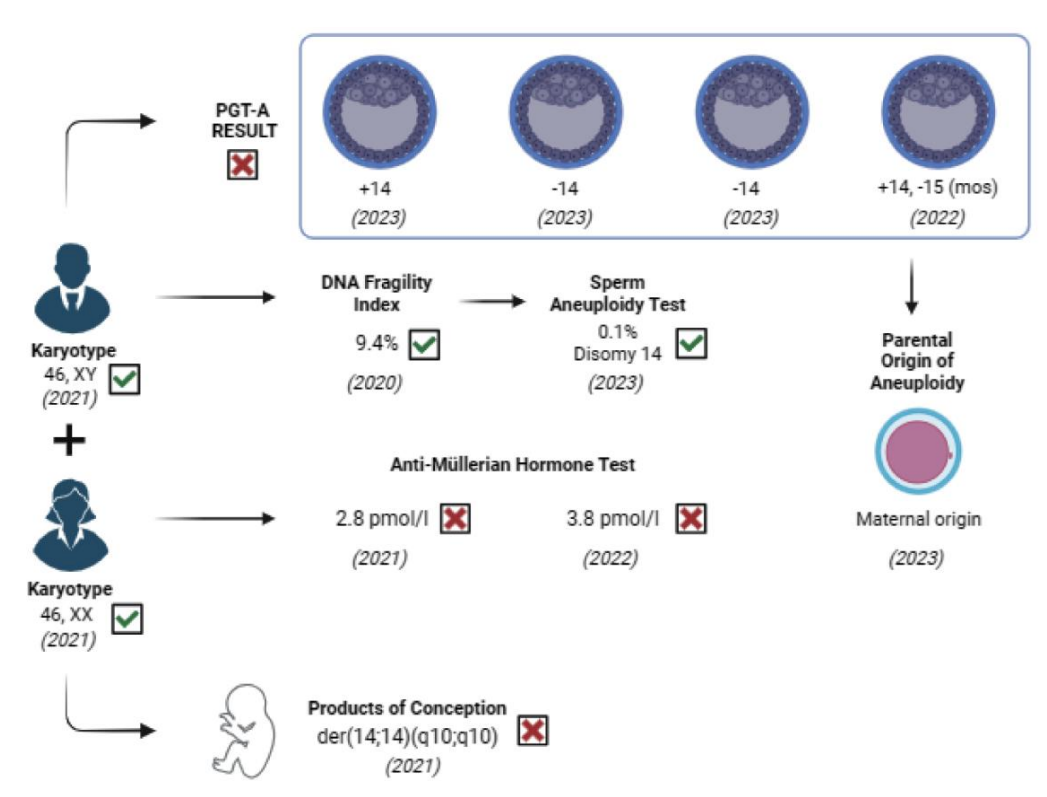
Summary illustration of investigations performed. The karyotype analysis was conducted for the couple due to their history of multiple miscarriages, and the products of conception were tested for one of the miscarriages. The embryos created through assisted reproductive technologies were found to be aneuploid following PGT-A testing. Image Source: Detection of Germline Mosaicism for Robertsonian Translocation 14;14: A Case Report.
Regular blood tests only check the genetic makeup of certain cells, but can’t check for specific sub-types (ie, eggs). Advanced testing can unveil the problem, explaining why pregnancies kept failing.
“If you’re facing repeated failures in IVF, the answer might be in the fine print of your DNA. ”
In detail… The patient’s recurrent miscarriages and IVF failures were linked to a Robertsonian translocation (14;14) confined to oocytes. Despite normal somatic karyotype, PGT-A revealed consistent chromosome 14 aneuploidies in embryos. SNP-based parental origin analysis confirmed maternal contribution. This highlights the need for integrated genetic diagnostics in unexplained recurrent pregnancy loss cases and consideration of mosaicism when embryo aneuploidy clusters around a specific chromosome.
Practical Takeaways
-
If you’ve had multiple miscarriages, ask about genetic testing options. A karyotype (blood test) is usually the starting point.
-
Seek emotional support and explore genetic counselling to supplement clinic information. Genetic findings can be overwhelming but empower informed decisions.
